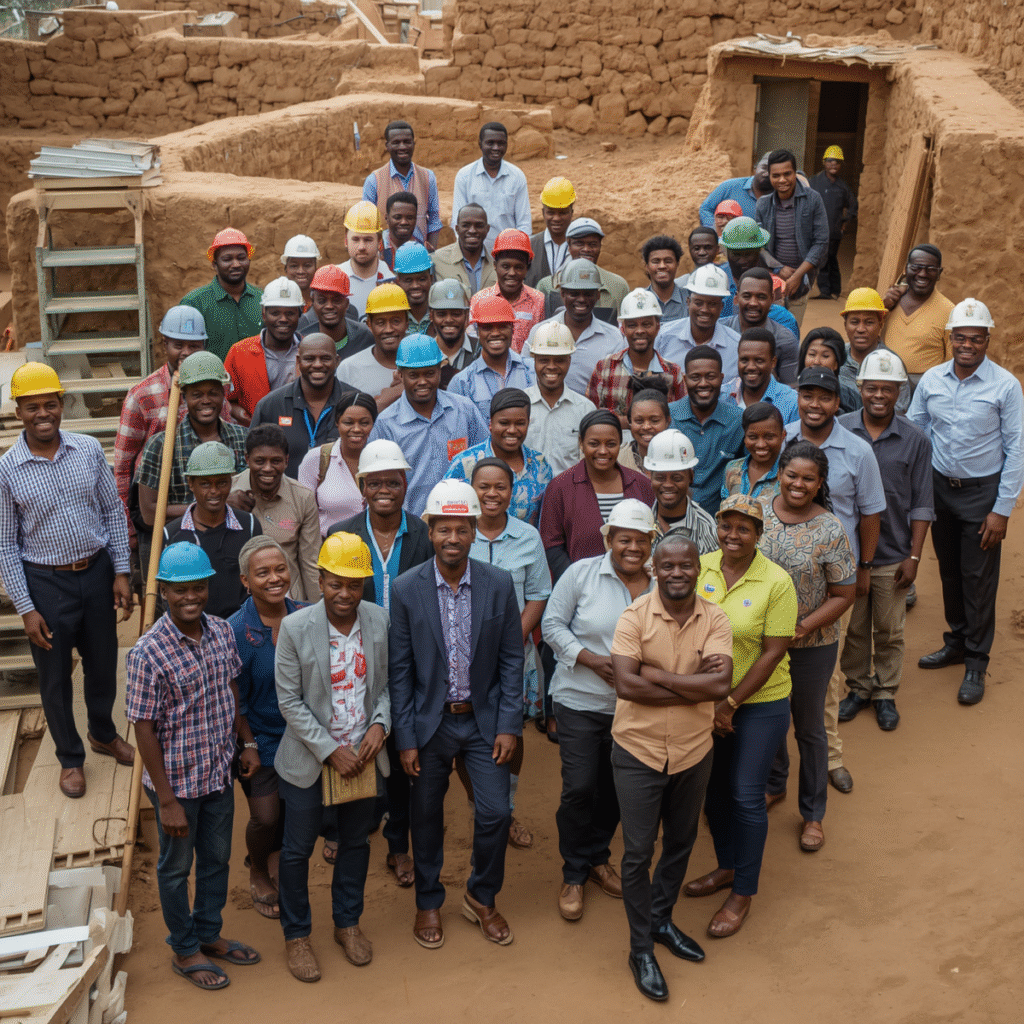
 ADSH’s ambition extends beyond service delivery. We are building a model designed to shift the systems themselves: changing housing and community development norms so that dignified, eco-integrated homes become the standard for lower income communities rather than the exception; and opening formal employment pathways for youth who currently face a stark choice between subsistence farming with no income security and urban migration in search of formal employment. ADSH’s marketable skills training, is embedded directly in the construction of their own community’s homes through the sweat equity model, creates a third pathway: formal, certified construction and administrative employment within their own communities, without requiring families to be separated or livelihoods uprooted.
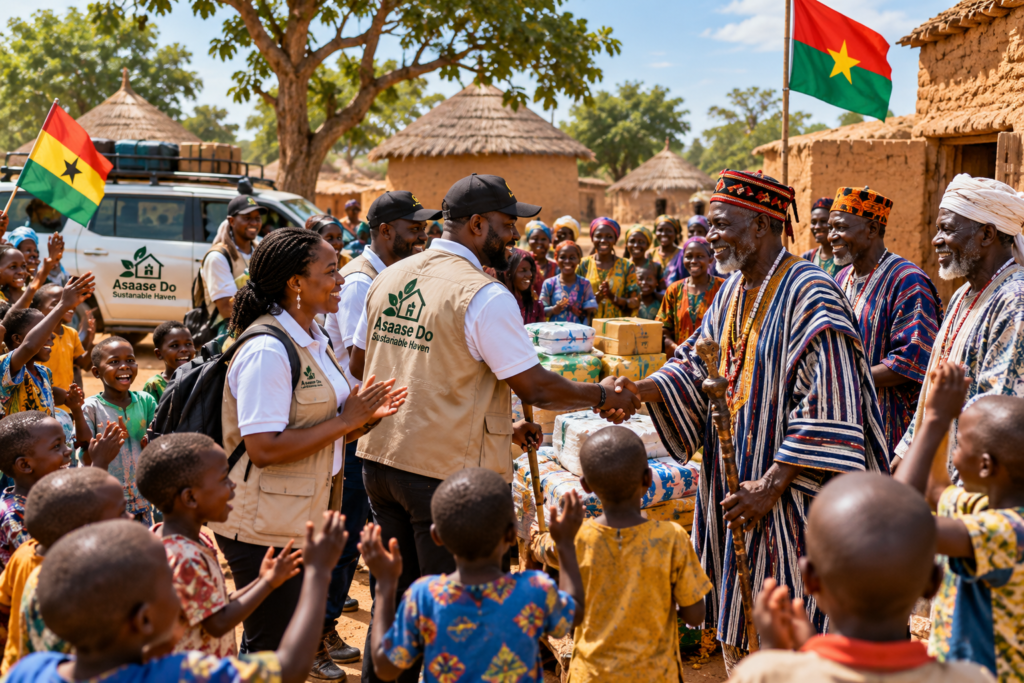
ADSH’s long-term vision extends beyond Ghana. Ghana is the proving ground, the place where the model is built, tested, and validated with rigour. West Africa is where it travels. Through diaspora networks, artisan partnerships, and cross-border relationships that Gayle Patterson has cultivated as a US-based founder with deep ties to the region, ADSH is positioned from its founding to serve as a replication model for community-led sustainable development across West Africa, beginning with Togo, Burkina Faso, and Cote d’Ivoire, and extending further as evidence and partnerships allow.
Ghana Housing Profile, launched by the Ministry of Works and Housing in collaboration with UN Habitat, reveals that 99% of Ghanaian households cannot afford a decent home as defined by current national standards. The scale of this challenge demands urgent, coordinated and well resourced action from every sector of society. Ghana’s current quantitative housing deficit stand at 1.8 million units, reduced from 2.8 million in 2010, yet the gap remains enormous. To address the full depth of need, the country required approximately 7.2 million extra rooms in 2020 alone. The Greater Accra Region carries the heaviest burden, with a deficit of 925,335 rooms, while the national urban housing shortfall stands at 5.7 million rooms, reflecting the immense pressure that rapid urbanisation is placing on communities across the country. Delivery rates compound the problem: only 33% of Ghana’s annual housing need is met each year. Approximately 90% of all housing is provided by individual households, often self-built over 5 to 15 years. The government has set a target of 200,000 new housing units per year through public private partnerships; however, current delivery stands at roughly 5% of that annual target. The market is also structurally imbalanced. There is a persistent oversupply of luxury accommodation for high-income earners alongside a chronic shortage of affordable low and middle-income housing, a paradox illustrated by a 12.7% vacancy rate coexisting with millions of households living in inadequate or overcrowded conditions. At the same time, adoption of climate-resilient and sustainable building materials, increasingly recognised in national policy, remains slow due to cost barriers and limited technical expertise. It is precisely within this landscape that Asaase Do Sustainable Haven, LBG was established.
ADSH’s mission to build sustainable communities through housing, innovation and environmental stewardship is a direct and practical response to a documented national emergency. Closing this gap requires more than policy commitments; it requires committed partners, purposeful investment and community-led action. Your partnership with ADSH contributes to that solution.
Click here to learn more about our obectives, scaling plan and ho to partner with us.
 “Welcome to Asaase Do Sustainable Haven, LBG (ADSH). We are grateful for your interest in our organization. ADSH is committed to practical, community-led initiativesthat improve lives, strengthen communities and promote a more sustainable future. We believe sustainable development is strongest when communities participate, local knowledge is respected and stakeholders work together. We therefore welcome your ideas, expertise, resources and partnership as we continue building initiatives that create lasting community value. Thank you for taking the time to learn about Asaase Do Sustainable Haven, LBG. We look forward to working with you”.
Warm Regards,
Gayle Patterson